



Biedermeier
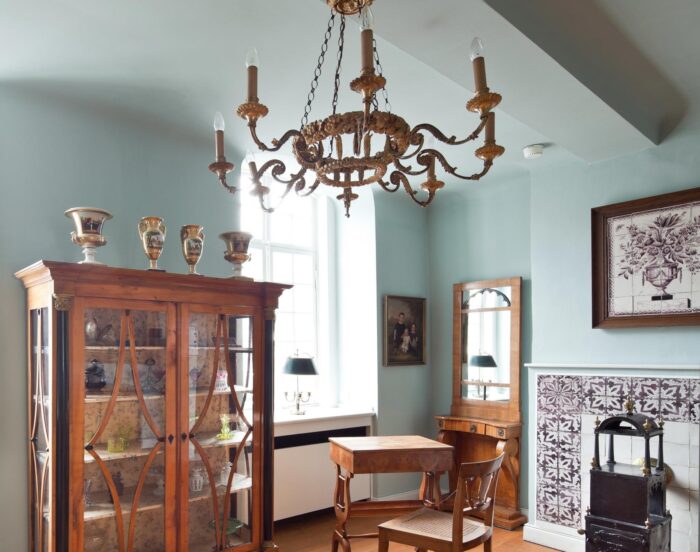
During the Biedermeier period, a lifestyle developed that placed the cozy, comfortable home at the center of life. Simplicity and practicality defined the style of interior design.
Green Salon
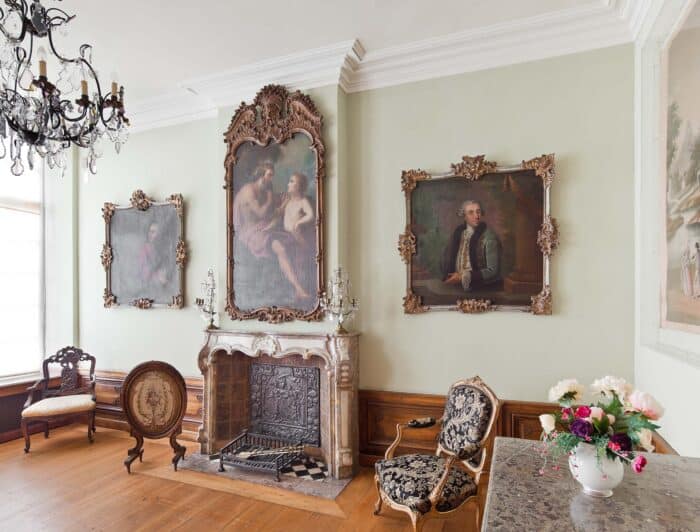
The Green Salon is entered through two magnificent portals with curved jambs in Rococo style.
It served as a representative reception room, but also as a venue for social gatherings.
Pharmacy
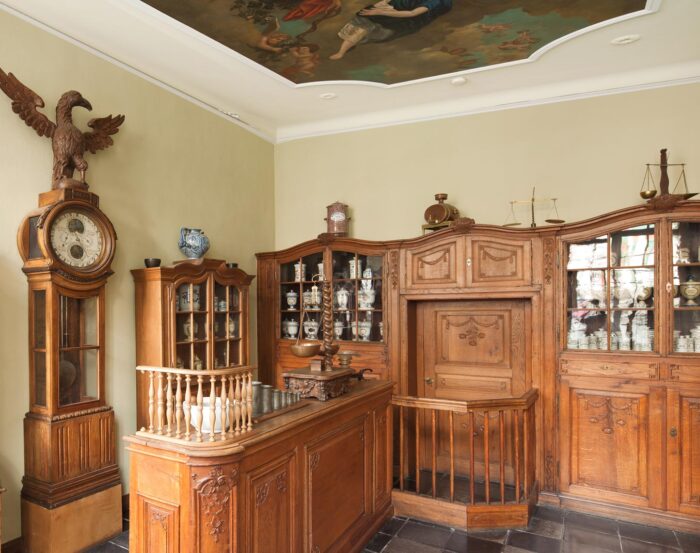
From 1662 on, the “Adler Pharmacy” was run by four generations of the Coebergh family. In
1783, Andreas Monheim took over the business. In 1786, he commissioned Jakob Couven with
a representative renovation of the residential and commercial building, which would remain in
the Monheims’ possession until 1939.
DIRECTOIRE ROOM
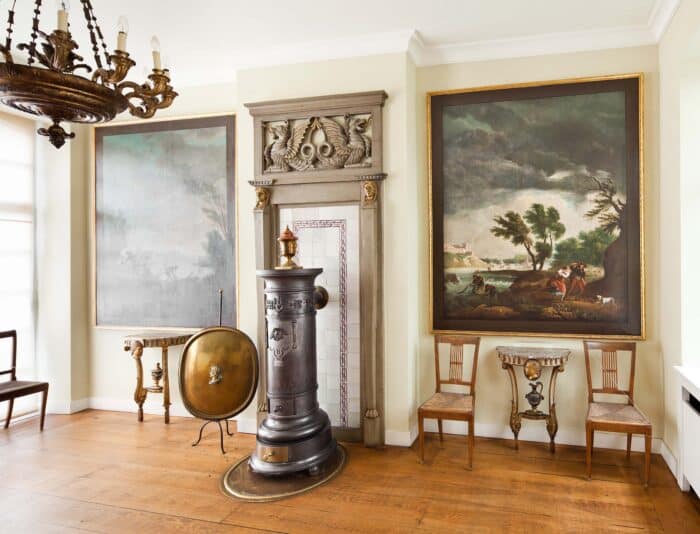
Between 1795 and 1799, post-revolutionary France was ruled by the French Directorate, after
which a particular style of furniture design and fashion was named: “Directoire”. The style is
characterised by its interest in Greco-Roman antiquity as a model for a democratic culture.
Historical Kitchen
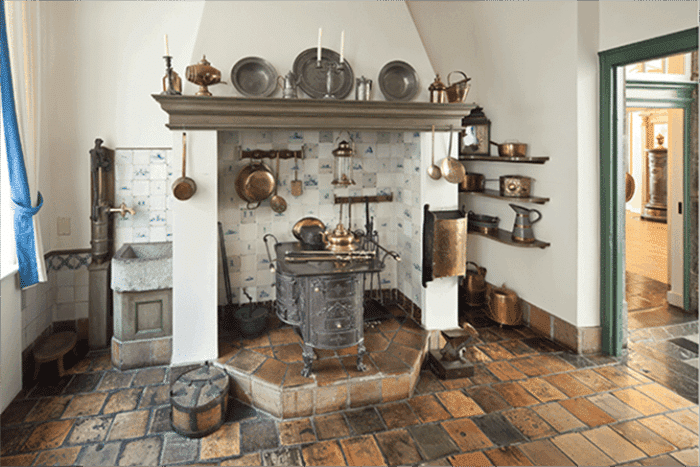
The furnishings and fitting of the kitchen reflect the state of the art in technological development
in the 18th/19th century. The coffee mill and coffee roaster hint at the luxury drinks of the times.
Coffee, tea and chocolate became an established part of middle-class life in the 18th century.
The Tiled Rooms
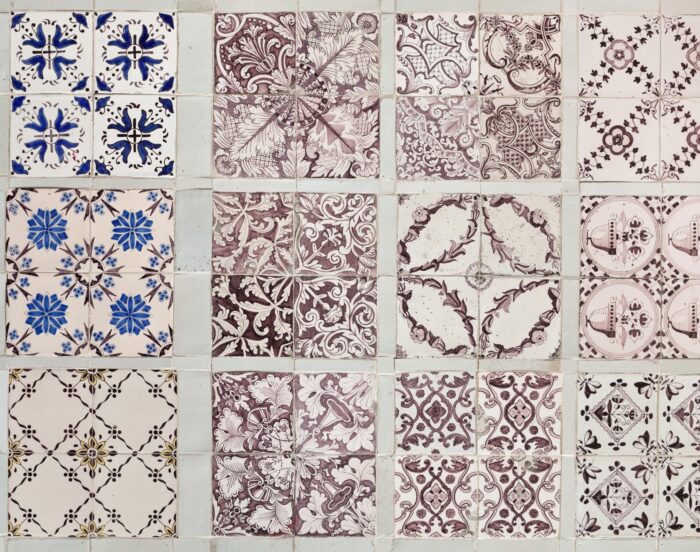
The two rooms of the house “Zum Lindenbaum” have only belonged to the Museum since 1961.
Previously, it was a separate small residential building. Today, around 6,000 Fayence tiles
donated by the Aachen art collectors Peter and Irene Ludwig are on show.
EMPIRE ROOM
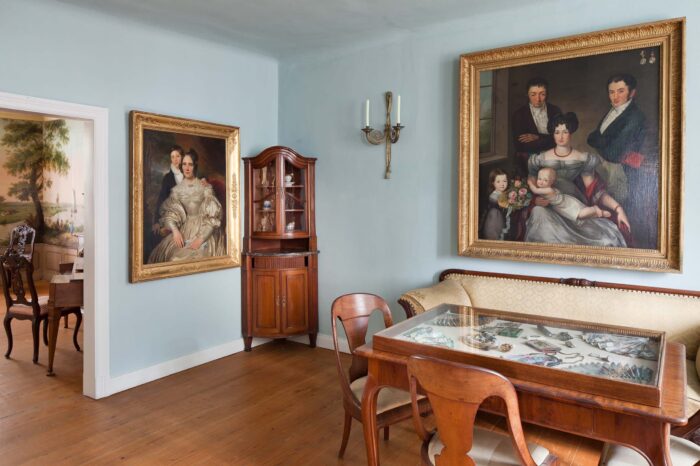
The Empire Room features furniture in the neo-classical austere style of the early 19th century
that, due to the influence of the Emperor Napoleon, spread throughout Europe. Straight lines
and right angles were typical features of this style, which replaced the carved ornamentation of
the previous Aachen-Liège style.
BANQUETING HALL
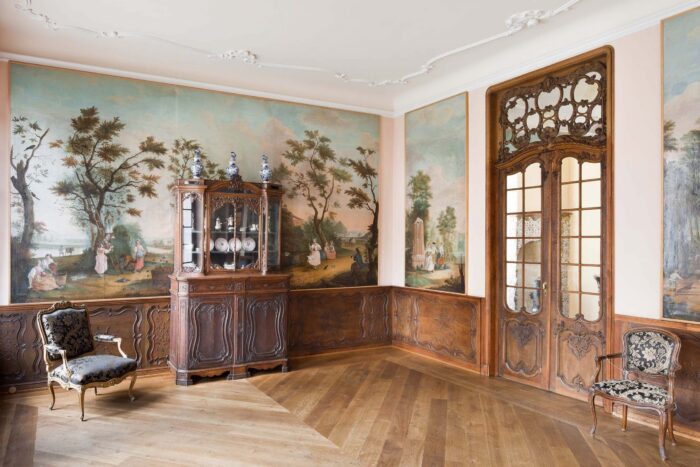
The banqueting hall or ballroom is modelled on courtly palace architecture and reflects the
strengthened self-image of the upper-middle class at the end of the 18th century. It served as a
representative venue for chamber music concerts, receptions and banquets, but also for the
signing of important contracts.
Music Room
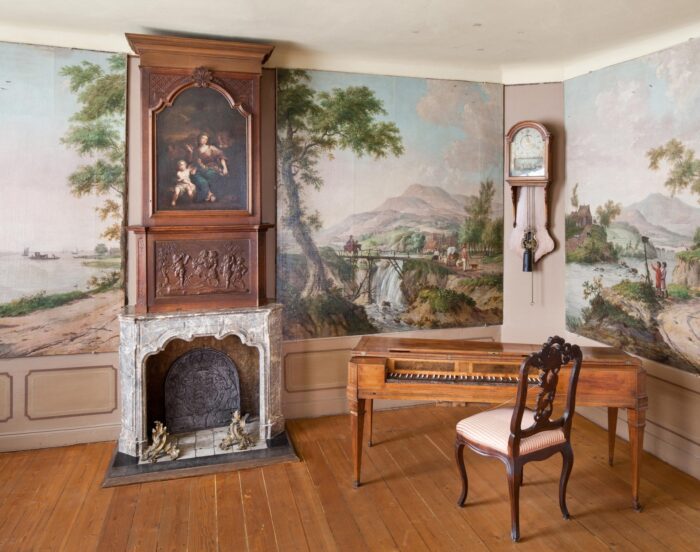
In the 19th century, music was part of the educational canon of the middle classes, alongside a humanist education, proficiency in several languages, and knowledge of literature, art, and theatre.
Inner Courtyard
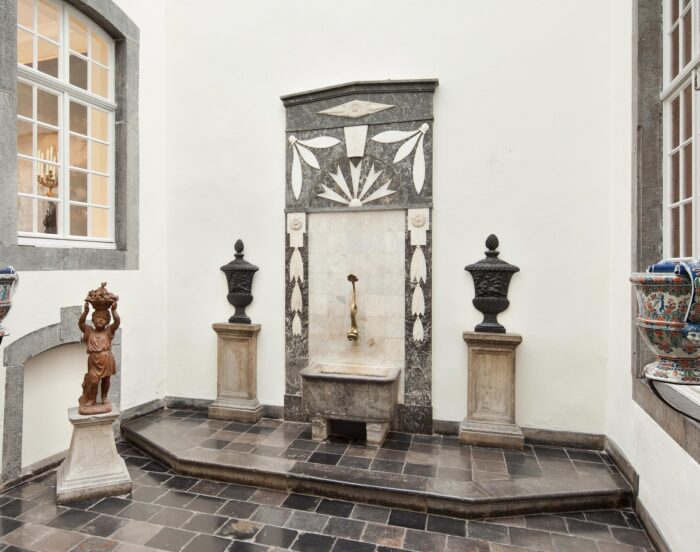
The courtyard connects the main building and the rear building. The fountain on the firewall adjoining the neighboring house has a marble surround dating from the late 18th century. Three crescents can be seen on the basin — the coat of arms of the Monheim family.